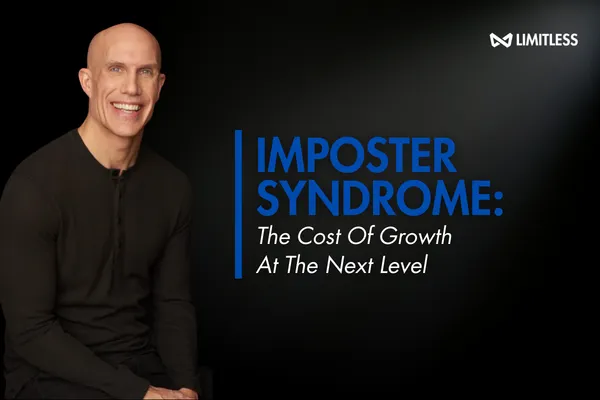
Imposter Syndrome - The Cost of Growth at the Next Level
Let me say this. If you’ve ever thought, “Who am I to be here?” you aren’t broke. You aren’t behind. You aren’t a fraud.
As tough as that may be when the voices come in.
The voice? The one that shows up right before you post the video, ask for the business, lead the meeting, charge your worth, or step into the room you worked hard to get into? That’s not truth. It might be the truth you tell yourself. You know what it really is?
Imposter syndrome.
Imposter syndrome isn’t a lack of ability, as much as we think it is. It’s a lack of permission.
Permission to be in the room. Permission to be confident. Permission to grow into the version of yourself you are.
If this shows up in your world, welcome. You’re in good company. You aren’t alone as much as we think we are.
What Imposter Syndrome Actually Is:
It doesn’t just hit beginners. In fact, it often shows up strongest right before the next level.
I’ve had conversations with leaders running hundreds of millions of dollars in business who quietly wonder, “What if they find out I don’t know everything?”
Good. You’re not supposed to know everything. That’s the best part. You won’t arrive. I promise.
It shows up in leaders. Top performers. Business owners. It shows up in those of us doing the work. That’s the only way you get it. How do you like them apples?
Why Imposter Syndrome Shows Up (And Why It’s Normal)
1. You’re Comparing Your Behind-the-Scenes to Someone Else’s Highlight Reel
Social media has made this worse. Hands down. That doesn’t mean social media is bad. We just see the things others want us to see.
We see the polish. The confidence. The wins. The rankings.
What we don’t see:
• The reps
• The doubts
• The failures
• The uncomfortable early stages
Imposter syndrome thrives when you compare your real life to someone else’s edited version.
2. You Confuse Mastery with Readiness
Somewhere along the way, we bought into the lie that confidence comes before action. Ever heard “Fake it till you make it”? Stop.
It doesn’t.
Confidence is not a prerequisite. It’s what happens when we do. You do it, learn from it, and get better because of it. The reps create readiness.
3. You’ve Outgrown an Old Identity
Imposter syndrome shows up when:
• You’re no longer the rookie
• You’ve started producing results
• People look to you for decisions
• Your environment has changed
Your brain is wired for safety, not success.
That tension you feel isn’t weakness. It’s growth. You are doing it.
You are starting to catch up.
How to Know When Imposter Syndrome Is Running the Show
Watch for these signs:
• “I’ll do it when I’m ready”
• Downplaying your experience or results
• Charging what you’re worth
• Avoiding visibility (posting, speaking, leading)
• Over-preparing
• Not acting
• Saying yes to less
Let me be blunt:
That’s not humility. That’s self-protection. Stop.
How to Overcome Imposter Syndrome When It Shows Up
1. Call It What It Is: Noise
Imposter syndrome isn't a fact. It’s fear.
Say it out loud if you have to:
“This is fear talking, not truth. This is not who I am.”
It starts with awareness.
2. Anchor to Evidence, Not Emotion
Imposter syndrome lives in emotion. Confidence lives in evidence.
Confidence anchors help this. You have done more than you know.
Write down:
• Wins
• Results
• People you’ve helped
• Problems you’ve solved
• Moments you stepped up, even imperfectly
Numbers don’t lie. Emotions do.
Your track record tells a very different story.
3. Take One Visible Action Anyway
This is where it ends.
Imposter syndrome dies when it’s exposed to action.
Post the video. Ask the question. Make the call. Lead the meeting. Raise your hand. Push the button.
You don’t eliminate fear by thinking your way out of it. You eliminate fear by action.
The first time always feels uncomfortable. The second time feels easier. Eventually, it becomes normal.
This is who you are.
Final Thought
If imposter syndrome is showing up in your life, take it as a sign. Not that you’re unqualified, but that you’re getting better.
You don’t need permission. You don’t need confidence. You don’t need to wait.
You’ve earned your seat. Act like it.